

3 Critical Technical Faults in Cold and Freezer Rooms: Causes and Comprehensive Solutions
introduction
Cold and freezer rooms are the lifeblood of many businesses in the food, health, and industrial sectors. However, even a minor fault in the refrigeration system can lead to massive economic losses and deterioration of stored product quality.
In this article, we review the three most common technical faults encountered in cold rooms and provide the necessary technical and preventive solutions to ensure maximum efficiency for your system.
1. 🧊 Heavy Ice Accumulation on the Evaporator
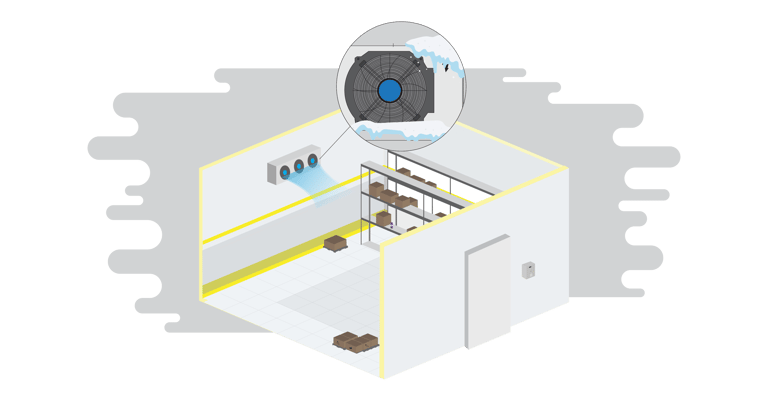
The evaporator is the heart of the cold room, and ice buildup is an indicator that the defrost system is not working efficiently. This effectively suffocates the evaporator, preventing proper heat exchange.
📌 Primary Causes
The most common cause is a failure in the defrost cycle components:
- Failure or malfunction of the defrost heaters responsible for warming the evaporator to melt the formed ice.
- A fault in the temperature sensor (thermostat sensor) that determines when the defrost cycle should start and stop.
- Operational Factor: Excessive moisture infiltration due to the door not being sealed tightly or frequent door openings.
🛠️ Technical and Preventive Solutions
1 - Check the Defrost System: Ensure the defrost heaters are working correctly and heating during the scheduled cycle.
2 - Calibrate Temperature Sensors: Check the temperature sensor and timer to ensure they are set to initiate the defrost process at the appropriate time and stop it before the room temperature rises too high.
3 - Regular Cleaning: Regular cleaning of the evaporator is necessary to remove dirt and debris, which reduces ice formation and improves heat exchange efficiency.
4 - Inspect Doors: Verify the integrity of the door seals and gaskets to prevent warm, moist air from entering the room.
2. ⚙️ Continuous Running of the Compressor (No Cycling)
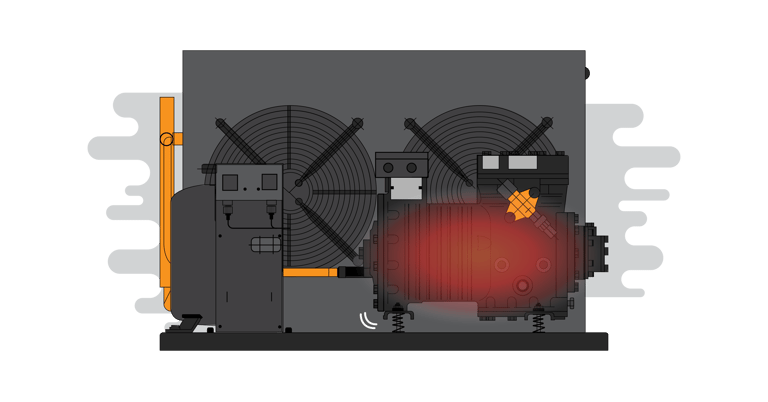
When the compressor runs continuously without reaching the required temperature setpoint, it's a serious sign that the system is operating beyond its capacity. This leads to excessive power consumption and rapid wear and tear on the compressor.
📌 Primary Causes
The main reason is the system's inability to reject heat efficiently, imposing an excessive thermal load on the compressor:
- Refrigerant Leak (Low Charge): A deficiency in the refrigerant (Freon) charge means the cycle cannot complete the cooling process effectively.
- Sensor Malfunction: Faults in pressure or temperature sensors provide inaccurate readings to the control unit.
- Excessive Thermal Load: Placing large quantities of warm products into the room at once or a general increase in the overall thermal load.
🛠️ Technical and Preventive Solutions
1 - Check Refrigeration Circuit Pressure: A qualified technician must check the refrigeration circuit pressure, ensure there are no leaks, and recharge the appropriate amount if necessary.
2 - Calibrate Sensors: Calibrate the temperature sensor and verify the accuracy of its reading to ensure the control unit receives correct information.
3 - Condenser Maintenance: Regular cleaning of the condenser is crucial. A clogged condenser prevents heat rejection, which raises the operating pressure and strains the compressor.
4 - Monitor Compressor Performance: After repair, monitor the compressor's performance to ensure it enters a regular on-and-off cycling pattern.
3. 🌡️ Temperature Variation Within the Room
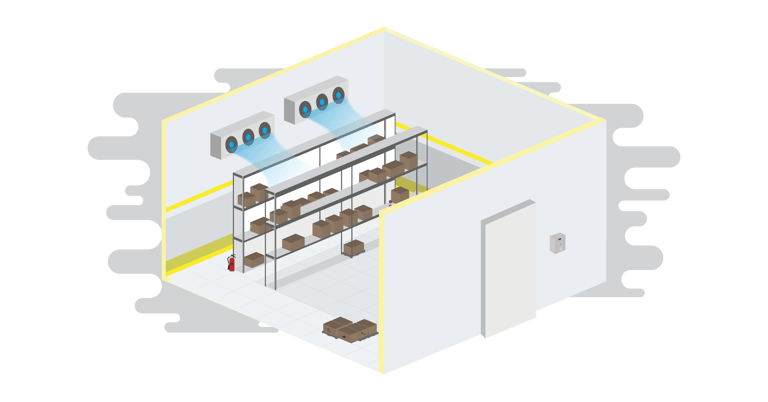
This occurs when the temperature differs significantly between various sections of the room. This can lead to partial product damage—products near the evaporator may freeze, while those far away may spoil due to elevated temperatures.
📌 Primary Causes
The cause usually lies in obstructed cold air movement or poor distribution of the cooling source:
- Improper Stacking: Stacking goods or products in a way that blocks the cold air exiting the evaporator fans or obstructs the air return paths.
- Airflow Obstructions: Stacking boxes close to the walls or directly underneath the evaporator unit.
- Evaporator Fan Failure: A malfunction or weak performance of the evaporator fans responsible for circulating cold air.
🛠️ Technical and Preventive Solutions
- Reorganize Storage: Ensure there is a gap of at least 15–20 cm between products and the walls, and avoid stacking boxes in a way that obstructs the airflow.
- Fan Repair/Redistribution: The evaporator fans must be redistributed or repaired to ensure consistent and uniform air delivery.
- Balance Flow: Verify balanced airflow in all corners of the room, especially in areas distant from the evaporator.
- Use Proper Shelving: Prefer open shelving that allows air to pass through both the top and bottom.
Conclusion: Prevention is Better Than Cure
The key to maintaining the efficiency of your cold room lies in regular preventive maintenance. Don't wait for a breakdown. Periodic inspection of defrost components, refrigerant pressure checks, condenser cleaning, and training staff on correct storage methods are wise investments that prevent potentially significant losses.
Are you struggling to diagnose any of these issues? Our technical team would be delighted to assist you in assessing and maintaining your refrigeration system for optimal performance.
3 Critical Technical Faults in Cold and Freezer Rooms: Causes and Comprehensive Solutions
© 2026 by HRC
This website is owned by : حسونة للتبريد
Contact Information
