
Cold Storage in Saudi Arabia
Introduction
Saudi Arabia’s food and beverage sector is experiencing rapid growth, driven by population growth, urban expansion, and increasing demand for fresh and frozen products.
As this growth continues, cold storage has become one of the most critical elements in ensuring food safety and product quality throughout storage, transportation, and distribution stages.
Any disruption in the cold chain can lead to significant financial losses, product spoilage, and potential non-compliance with food industry regulations and standards.
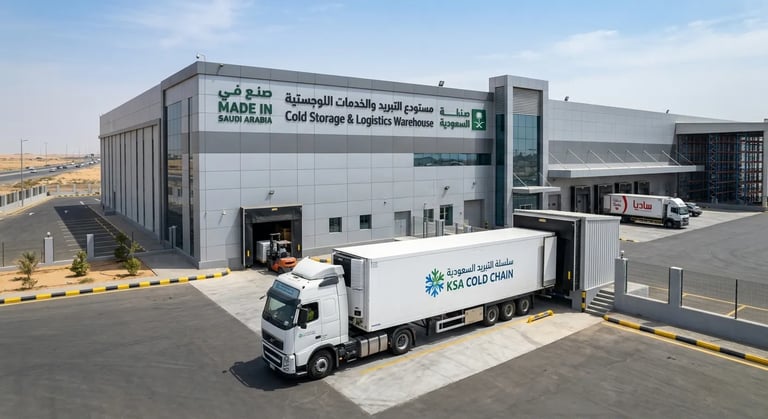
Why Is Cold Storage Essential in the Saudi Market?
Many food products require specific temperature conditions to maintain their quality, including:
-Meat and poultry
- Fish and seafood
- Dairy products
- Fruits and vegetables
- Frozen foods
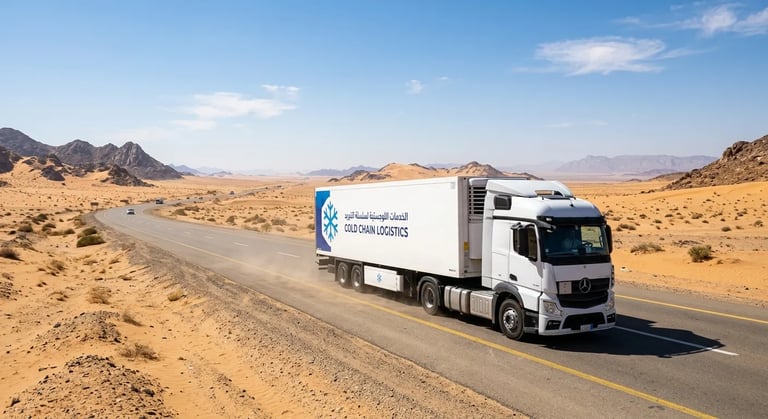
With temperatures exceeding 45°C (113°F) in some regions of the Kingdom during summer, maintaining an uninterrupted cold chain becomes a major challenge that requires advanced infrastructure and modern technologies.
Key Benefits of Cold Storage
Preserves food quality and freshness
✔ Reduces food waste
✔ Extends product shelf life
✔ Ensures regulatory compliance
✔ Enhances customer and consumer confidence
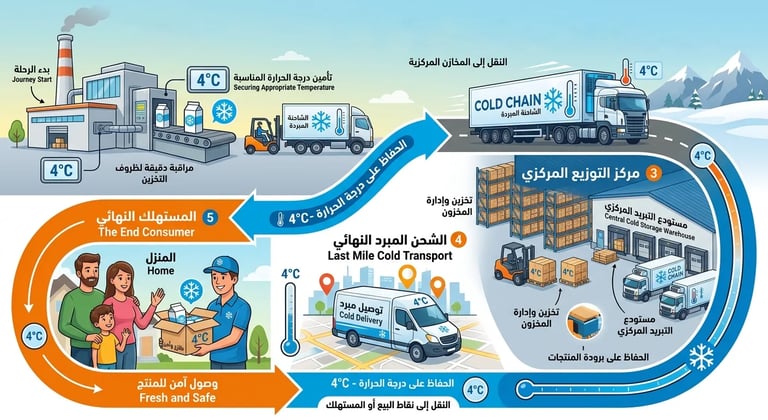
Major Cold Chain Challenges in Saudi Arabia
1. High Ambient Temperatures
Saudi Arabia’s climate places considerable pressure on refrigeration systems, particularly during the summer months, requiring highly efficient equipment capable of operating continuously.
2. Long Distances Between Cities
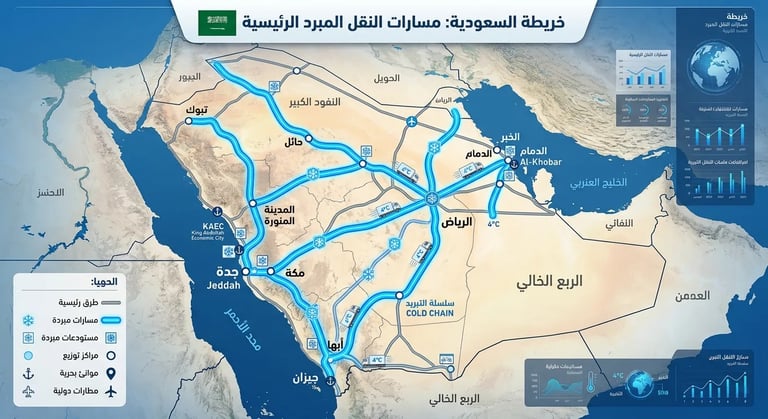
Distribution networks connecting major cities such as Riyadh, Jeddah, and Dammam cover extensive distances, making real-time monitoring and temperature control during transportation essential.
3. High Energy Consumption
Refrigeration systems account for a significant portion of energy consumption in logistics facilities. As a result, companies are increasingly adopting more efficient and sustainable solutions.
4. Regulatory Compliance
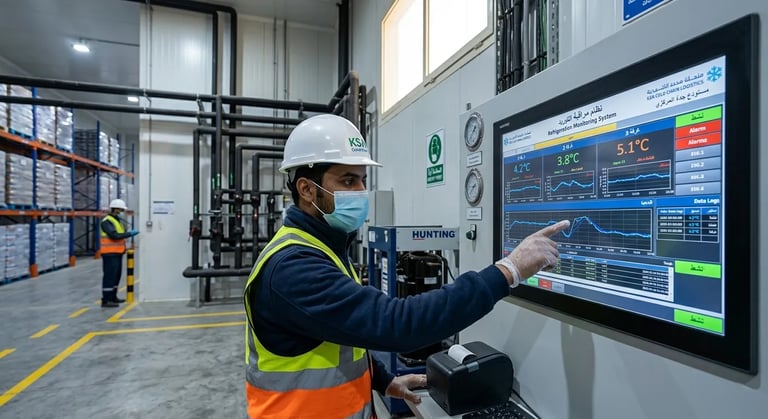
Regulatory authorities require continuous temperature monitoring, record keeping, and the ability to retrieve historical data whenever necessary.
Components of Modern Cold Storage Infrastructure
Cold Rooms
Cold rooms are used for storing fresh products such as fruits, vegetables, and dairy products at temperatures ranging between 0°C and 4°C.
Freezer Rooms
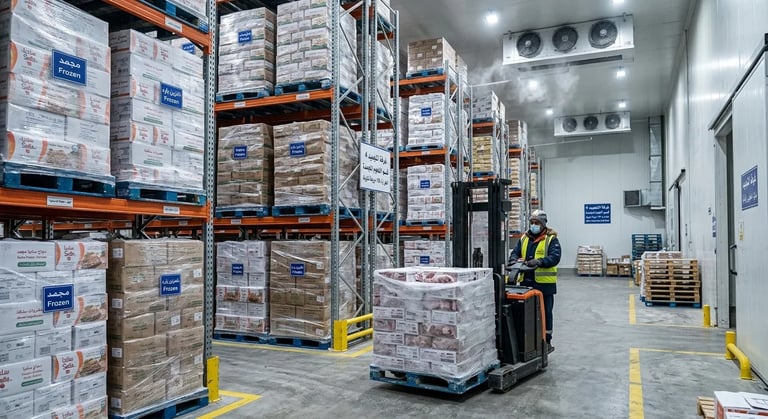
Freezer rooms are designed for storing meat, seafood, and frozen products at temperatures reaching -18°C or lower.
Insulated Sandwich Panels
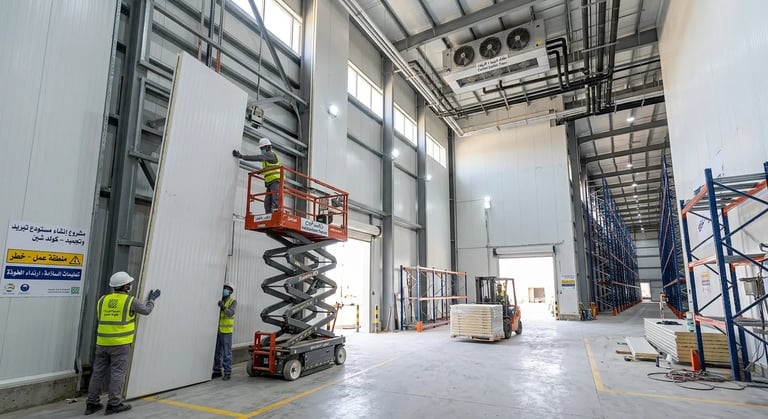
Insulated sandwich panels help minimize heat transfer and improve refrigeration efficiency, directly contributing to reduced energy consumption.
Large Refrigerated Warehouses
Large enterprises rely on advanced refrigerated warehouses equipped with monitoring and control systems that maintain stable temperatures around the clock.
Latest Cold Storage Technologies
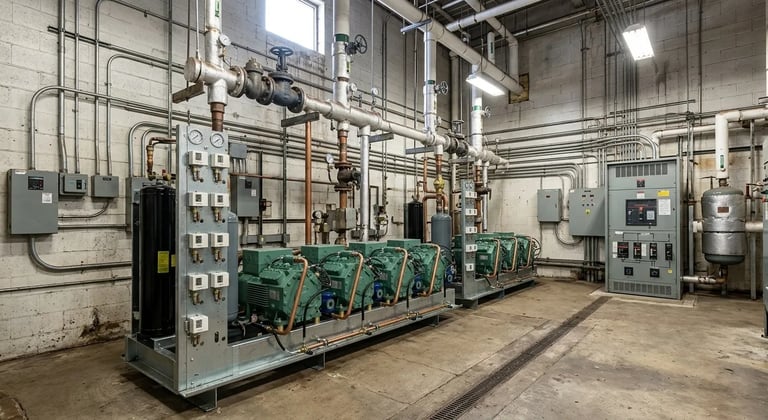
Multi-Compressor Systems
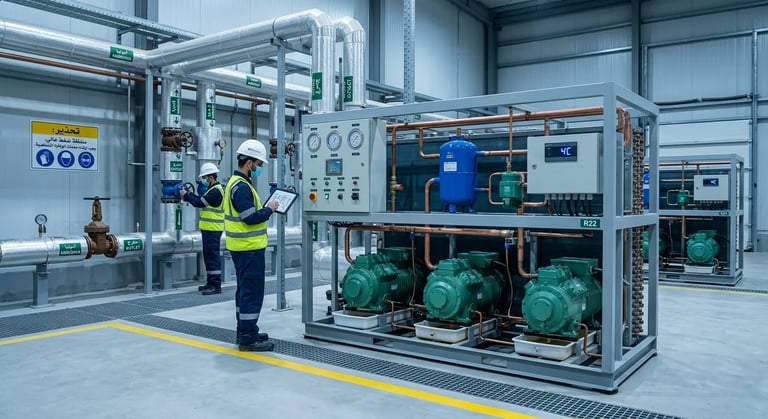
Multi-compressor systems provide greater operational flexibility by running only the number of compressors required according to actual cooling demand.
Benefits:
- Energy savings
- Reduced equipment failures
- Extended equipment lifespan
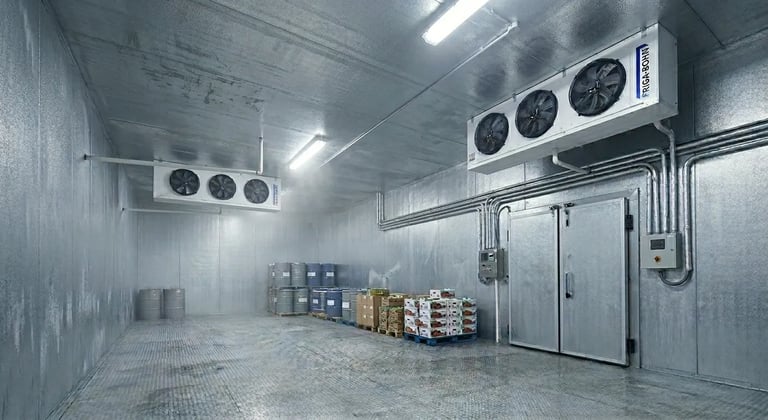
Air Distribution Systems
These systems help ensure the uniform distribution of cold air throughout the entire warehouse.
Benefits:
- Ensures uniform cold air distribution throughout the warehouse.
- Maintains stable and balanced temperatures.
- Reduces thermal variations between different storage zones.
- Contributes to preserving the quality and safety of stored products.
- Minimizes the formation of moisture and condensation inside the warehouse.
Return on Investment (ROI) in Cold Storage
Benefits of Investing in Modern Cold Storage Infrastructure
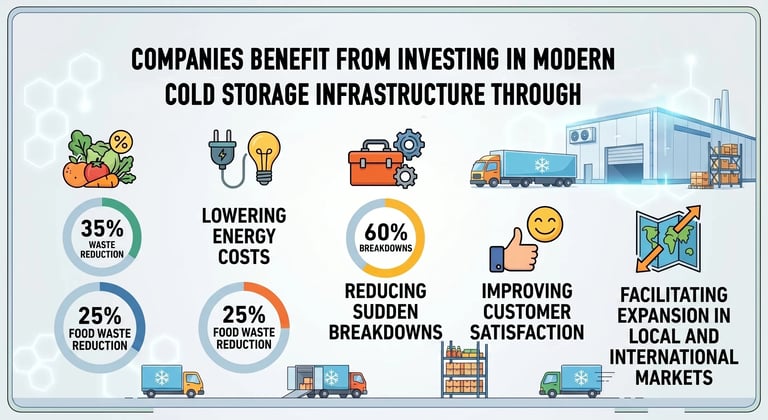
Companies gain significant advantages by investing in modern cold storage infrastructure, including:
- Reduced food waste.
- Lowered energy costs.
- Minimized unexpected equipment failures.
- Improved customer satisfaction.
- Facilitated expansion into local and global markets.
Key Performance Impacts
The following table highlights the quantitative impact of these investments:
MetricImpactWaste
Reduction35%
Energy Savings25%
Reduction in Equipment Failures60%
The Future of Cold Storage Under Saudi Vision 2030
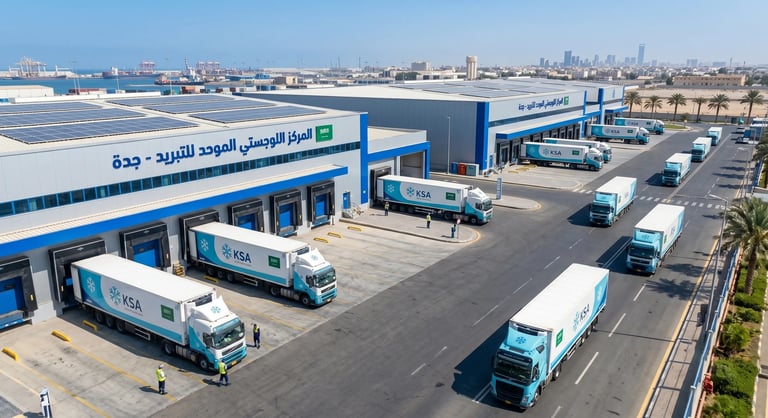
The development of cold chain infrastructure is a key component of Saudi Vision 2030 objectives related to food security and logistics sector development.
The Kingdom is witnessing growing investments in:
- Modern refrigerated warehouses
- Refrigerated transportation fleets
- Smart and digital solutions
- Environmentally sustainable technologies
Conclusion
Cold storage has become one of the most critical success factors in Saudi Arabia’s food and beverage industry. As demand for food products continues to grow and quality and compliance standards become increasingly stringent, investing in advanced refrigeration solutions and smart technologies represents a strategic step toward sustainability, growth, and enhanced competitiveness in the Saudi market.
© 2026 by HRC
This website is owned by : حسونة للتبريد
Contact Information
